| Fevzi Öztürk |
The first wave of ECM and BPM applications focused largely on "self-contained" processes, such as purchasing or invoice payment, that have a single owner and typically apply to a single unit of the business. But as businesses moved from inside-out processes to outside-in (that is, customer-centric) business processes, processes started to become more complex.
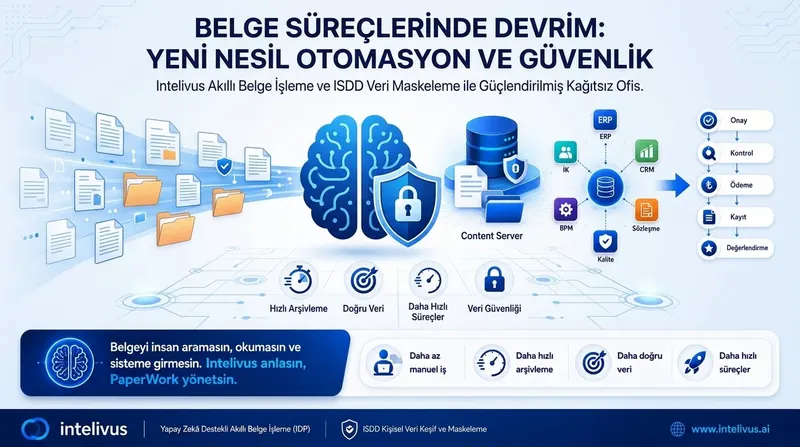
Business processes are part of a broad value chain made up of many cross-department processes and participants. Each value chain is driven by the content created and used in the processes it contains. But to reach business and process goals, a common platform is needed to access and use this information, covering:
• The tasks to be performed,
• The employees responsible for performing those tasks,
• The data and content needed to complete those tasks.
Connecting processes that work independently of each other in a value chain that starts with a sale and ends with product delivery and customer service, through an ECM platform, is a good example of this approach to building digital workspaces.
At each stage of the process, employees have different information and software needs to perform their tasks. That is why, unless a business thinks of these workspaces as an integrated system, it sows the seeds of major inefficiency ("does that mean I have to copy and paste information from one system to another?") and customer frustration ("I already gave you this information, do I have to give it to more than one person? Why don't you have it?").
Two key issues need attention to overcome these challenges.
• Businesses must establish a common language and platform to define these processes and how they relate to each other. This means defining a common, consistent platform and method that covers people, tasks, data and content. Without this common platform and method, there is no way to create a cross-department value chain.
• The content needed for each process in a value chain is mostly either shared or similar. That is why a common platform is needed to make critical content available across multiple departments or processes. In addition, most of the work within a process is usually done in a specific application (for example, in a CRM system in sales, or in an ERP system in production and finance). So there must be an easy and transparent way for employees to access the content they need from the business application where they do their work.
Every business is working hard to automate and digitalize its work. Senior executives go to conferences and come back convinced that their business needs an ambitious "Digital Transformation" initiative, without realizing that some of the infrastructure and skills needed for intelligent digital transformation already lie in their past experience with ECM and BPM.
From the perspective of ECM systems, digital transformation efforts should focus on moving to applications that share the content needed in these business processes with the relevant process stakeholders whenever it is needed, for specific business goals. At the same time, implementing a platform that provides the necessary content within existing critical business applications will allow the business to see the benefits ECM and BPM systems have promised for many years finally come true.
In conclusion, digital transformation with ECM and BPM systems minimizes human intervention in business processes, prevents lost time, unnecessary costs and errors, and makes businesses more efficient.
Sources
https://www.ibm.com/think/topics/document-management
https://www.ibm.com/think/topics/document-workflow
https://www.ibm.com/docs/en/cloud-paks/cp-biz-automation/25.0.1?topic=capabilities-content-services
Would you like to see PaperWork in your organization?
Request a Demo