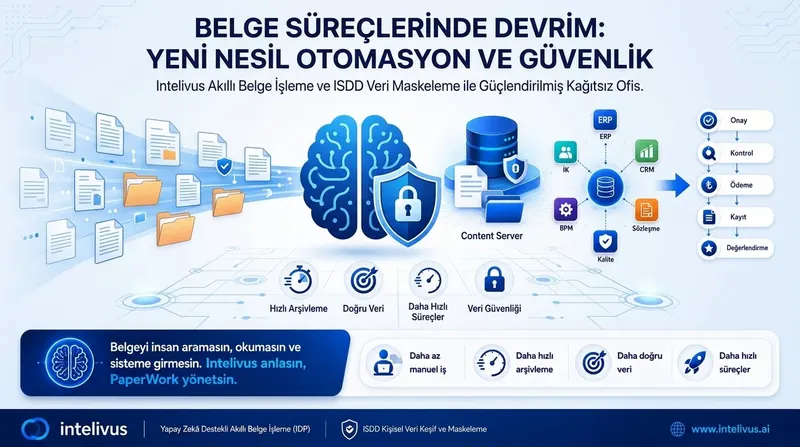
The Evolution of Business Process Management: Integrating Learning AI Agents into Enterprise Workflows

In the constantly evolving landscape of business operations, the search for efficiency, adaptability and innovation has led organizations to rethink traditional process management models. Business Process Management (BPM), a discipline built on the systematic design, execution, monitoring and optimization of workflows, has long been a cornerstone of organizational efficiency. However, as industries face the complex challenges of digital transformation, a new paradigm is emerging in which static, rule-based process points are increasingly being replaced by dynamic, self-learning artificial intelligence (AI) agents. This shift is not just a technology update but a fundamental redesign of how businesses work, learn and grow. The integration of learning AI into BPM is a turning point in the convergence of human creativity and machine intelligence, offering unprecedented opportunities for agility, precision and scalability. Yet this transformation also raises critical questions about ethics, governance and the future role of human expertise.
Foundations of Traditional Business Process Management: To grasp the importance of learning AI, it is important to understand the traditional BPM framework. Historically, business processes have been structured as linear or branching sequences of discrete nodes designed to accomplish a specific task. These nodes typically include tasks such as data entry, approval, quality control or customer interaction, governed by predefined rules and human oversight. This model has helped organizations standardize operations, reduce errors and achieve economies of scale. For example, a manufacturing company has managed steps such as order intake, inventory control, production planning, product shipment and after-sales support through meticulously planned processes.
However, traditional BPM has some inherent limitations. Rigid process flows struggle to adapt to real-time disruptions such as supply chain bottlenecks or sudden shifts in consumer demand. Human-based nodes are prone to fatigue, inconsistency and delay. Rule-based automation tools lack the cognitive flexibility to handle exceptions or unstructured data.
The Rise of Learning AI Agents: Self-learning AI agents are advanced algorithms that analyze large datasets, recognize patterns and make decisions with minimal human intervention. Using techniques such as machine learning (ML), natural language processing (NLP) and reinforcement learning (RL), these agents perform exceptionally well in environments dominated by uncertainty and complexity. As in customer service processes at telecommunications companies, they can resolve routine requests autonomously using NLP, route complex cases to human experts and improve their performance over time through feedback.
Transformation in Supply Chain Management, An Example Case: To illustrate the transformative power of AI in supply chain management, consider a global retailer facing stockout and overstock problems. The company uses learning AI agents in its demand forecasting, supplier relationship management and warehouse logistics processes. These agents make dynamic decisions by analyzing real-time social media trends, weather forecasts and economic indicators. In a short time, stockouts fall by 40%, inventory costs drop by 25%, and the company becomes able to adapt quickly in times of crisis.
The Synergy of Human and Machine Intelligence: The integration of AI into BPM is redefining human roles, taking over routine, data-intensive tasks and steering people toward creative problem solving, strategic planning and interpersonal interaction. For example, in recruitment processes, AI agents can analyze technical qualifications while human resources specialists assess cultural fit and soft skills. In healthcare, while tasks such as patient admission are handled by AI, healthcare workers can focus on diagnosis and care.
Ethical and Governance Challenges: The growing autonomy of learning AI systems also brings ethical issues and governance challenges. Rigorous work is needed on topics such as the explainability and transparency of decisions and the reduction of bias. "Explainable AI" (XAI) methods make decision-making processes understandable to humans. Techniques such as SHAP and LIME are improving the interpretability of AI decisions.
Steps Forward, Balancing Innovation and Caution: Organizations should pursue AI integration in line with clear business goals. Pilot projects, phased implementations and cross-team collaboration are critical in this process. Regulatory frameworks should establish standards for data privacy and AI accountability and support this transformation.
Conclusion: The integration of self-learning AI agents into business process management has ushered in a more fluid, intelligent era for businesses, built on human-machine collaboration. This transformation makes previously unimaginable efficiencies possible, from hyper-personalized customer experiences to resilient, self-optimizing supply chains. Technological innovation alone is not enough for success; an approach that is committed to ethical values, enhances human potential and supports inclusive growth is also required. This journey is only beginning and will shape the destiny of future industries and societies.
Taner Akdeniz, AI Systems Architect
Sources
https://www.ibm.com/think/topics/agentic-workflows
https://www.anthropic.com/research/building-effective-agents
https://camunda.com/blog/2025/03/essential-agentic-patterns-ai-agents-bpmn/
Would you like to see PaperWork in your organization?
Request a Demo