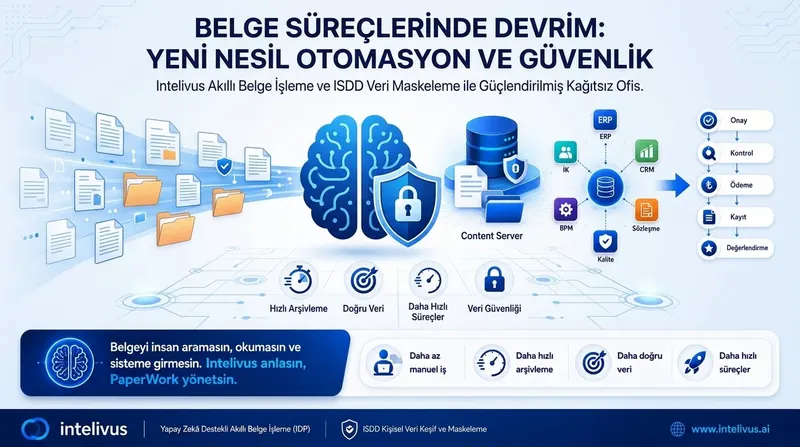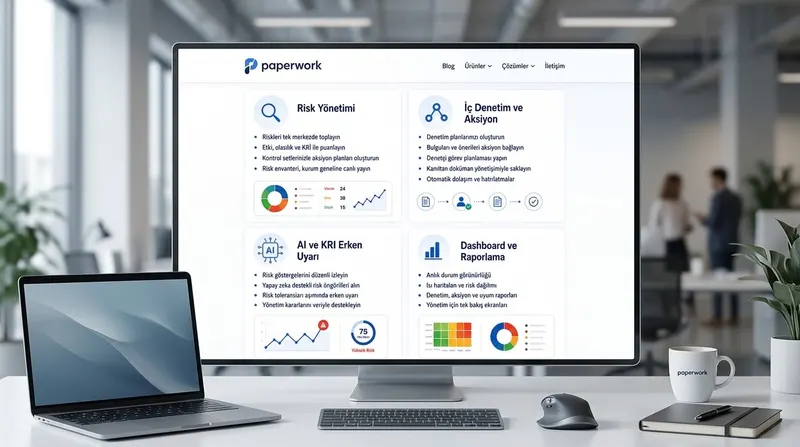
A Brief Overview of PaperWork and Its Solutions
PaperWork is a low-code platform founded in 1998 to optimize business processes and document management. Built to accelerate the digital transformation of organizations, the platform specializes in process automation and document management.
Key Features and Solutions
- Digital Process Automation:
- Automation: PaperWork increases efficiency by automating manual, time-consuming business processes. The platform lets organizations automate and optimize processes quickly.
- Low-Code Development:
- User-Friendly Interface: PaperWork's low-code development interface allows even non-technical users to build complex digital processes. Its visual, drag-and-drop interface makes it easy to develop and deploy solutions quickly.
- Artificial Intelligence Powered Operations:
- Artificial Intelligence and Machine Learning: PaperWork uses AI algorithms to analyze documents and identify patterns and trends, enabling more efficient ways of working. These solutions include an AI-powered question-and-answer application (Query Insight), automatic document classification and data capture (Intelivus), and masking of personal data in documents in line with KVKK (Turkish Personal Data Protection Law) (ISDD).
- Robotic Process Automation (RPA):
- RPA Integration: With robotic process automation, PaperWork makes business processes faster and more efficient. RPA bots handle tasks such as collecting and processing data, reducing human error and processing times.
- Document Management:
- Centralized Document Management: PaperWork offers a high-performance, secure document management system. It provides a central repository for capturing, managing, sharing and archiving documents, giving users fast and easy access to them.
- ERP and SAP Integrations:
- Integration Services: PaperWork works together with ERP systems such as SAP and other enterprise applications to optimize business processes. These integrations enable more effective process management and a seamless flow of data.
Application Areas and Industry Use
PaperWork serves a broad user base across industries such as finance, industrial manufacturing, energy, insurance, healthcare and retail. The platform helps organizations increase operational efficiency, reduce costs and improve customer satisfaction.
With its comprehensive solutions and low-code development capabilities, PaperWork accelerates digital transformation and helps organizations gain a competitive advantage.
The Impact of Artificial Intelligence on Manufacturing and Human Resources
The impact of artificial intelligence (AI) on manufacturing and human resources is far-reaching and can have both positive and negative consequences.
Impact on Manufacturing
- Higher Efficiency and Automation: AI can significantly increase efficiency by expanding automation in manufacturing processes. In smart factories, AI and automation continuously optimize processes through real-time data collection, which lowers costs and improves quality.
- Maintenance and Repair: AI improves the maintenance and repair of robots and machines in factories. This minimizes production downtime and supports a continuous production flow.
- Customer Service and Data Analytics: AI-powered systems also play an important role in customer service. With chatbots and data analytics, customer requests can be handled faster and more effectively, increasing customer satisfaction.
Impact on Human Resources
- Recruitment and Training: AI is driving a major transformation in human resources (HR) processes. In recruitment in particular, AI lightens the workload of HR departments by filtering applications and scoring candidates. In training, it evaluates employee performance, identifies gaps and offers personalized training programs.
- Performance Management and Career Development: AI analyzes employee performance and supports career development. These systems allow HR to focus more on its strategic tasks, which can improve employee satisfaction and productivity.
- Creation of New Fields of Work: While automation and AI replace some traditional jobs, they also create new ones. New professions are emerging, such as AI specialists, data analysts and robotic process specialists. This brings new balances and opportunities to the labor market.
Ethical and Social Impact
The spread of AI also raises ethical and privacy concerns. There are concerns about bias in the decision-making of AI systems and about the use of personal data. Trust and dependency in the interaction between AI and people are also important issues.
In conclusion, while AI offers major opportunities in manufacturing and human resources, the technology must be managed responsibly and ethically. Understanding its potential risks and effects is critical to ensuring it has a positive impact on people's lives.
AI Demand and Needs Among Businesses in Türkiye
Demand for AI technologies in Türkiye is growing rapidly. This growth is driven by businesses across industries seeking to increase efficiency, reduce costs and gain a competitive advantage.
The Spread of AI Applications
- Manufacturing and Industry 4.0: Smart factories use AI and automation to optimize production processes, improving efficiency and quality. Through real-time data collection and analysis, these technologies help reduce costs and increase customer satisfaction.
- Agriculture and Sustainability: AI also plays an important role in agriculture. Autonomous farming robots and agricultural information systems are used to increase productivity and promote sustainable farming practices. Energy management systems and solutions for tackling climate change are also supported by AI.
- Banking and Finance: The banking industry uses AI technologies to optimize business processes, improve customer service and strengthen security. Technologies such as machine learning and natural language processing make financial services more personalized and faster.
- Retail and E-commerce: In retail, the customer experience is being improved with AI-powered chatbots, data analytics and optimization technologies. These technologies bring efficiency to areas such as inventory management, pricing and customer service.
What Businesses Need to Adopt AI
- Technical Infrastructure and Quality Data: To use AI applications effectively, businesses need quality data and strong technical infrastructure. Gaps in these areas can undermine the success of AI projects.
- AI Specialists and Training: Adopting and implementing AI technologies requires qualified specialists. Expanding AI education and specialization programs is therefore important.
- Research and Entrepreneurship Support: Developing innovative AI solutions requires support for research and entrepreneurship. Organizations such as the Türkiye Artificial Intelligence Initiative (TRAI) make important contributions in this area.
International collaboration: Strengthening international partnerships is important for reaching global standards in AI and staying competitive. This allows businesses in Türkiye to play a more active role in the global market.
Promising Areas
- Natural Language Processing: Chatbots, language translation and other language processing applications are among the most important uses of AI. Investments in this area deliver significant improvements in customer service and sales.
- Deep Learning and Robotics: Deep learning and robotics offer major opportunities, especially in industries such as manufacturing and healthcare. These technologies increase operational efficiency and create new fields of work.
In conclusion, businesses in Türkiye are showing strong interest in AI technologies and increasing their investments in this area. However, meeting the needs for infrastructure, expertise and collaboration is essential for using AI effectively.
Industries and Fields Directly Affected by AI
- Finance and Fintech: AI is transforming the finance industry. Banks and fintech companies use AI technologies for customer support, fraud prevention, online security and investment portfolio management. Robo-advisors in particular are widely used for investment advice and management. AI also makes financial transactions more secure by strengthening security with biometric data and identity verification systems.
- Healthcare: The healthcare industry benefits significantly from AI technologies. AI is used in disease diagnosis, treatment plan optimization and patient data analysis, improving the quality and efficiency of healthcare services. AI also has a major impact on applications such as medical imaging and robotic surgery.
- Manufacturing and Industry 4.0: AI plays an important role in Industry 4.0 by improving efficiency and quality in manufacturing. Smart factories use AI and automation to optimize production processes while reducing costs and increasing customer satisfaction. These technologies are also used effectively in maintenance and repair.
- Retail and E-commerce: Retail and e-commerce are key areas where AI is used to improve the customer experience. With chatbots, data analytics and personalized marketing strategies, AI optimizes customer service and sales processes. AI is also widely used in operational processes such as inventory management and pricing.
- Cybersecurity: AI also plays a critical role in cybersecurity. Big data analytics and machine learning techniques are used to detect and prevent cyber threats. AI is also used to build stronger defenses against cyberattacks.
- Human Resources: AI brings significant improvements to human resources (HR) processes such as recruitment, performance management and employee experience. AI technologies are used in many areas, from candidate selection to training. This increases the efficiency of HR departments and lets them focus more on strategic tasks.
Beyond these industries, the impact of AI technologies is steadily growing in many other fields such as agriculture, logistics, law and education. Every industry is using the opportunities AI offers to make its operations more efficient and gain a competitive advantage.
Professions Set to Rise with AI
- Data Scientist and Analyst: Data science and analytics have become essential for making sense of large data sets and making strategic decisions. Companies need data scientists and analysts and are looking for professionals who work alongside AI and machine learning.
- AI Specialist: With deep knowledge of AI technologies and applications, AI specialists work on developing algorithms and training and deploying learning models. They use AI technologies in many areas, such as automation and image and speech recognition, to solve complex problems.
- Cybersecurity Specialist: Cybersecurity is critically important in the digital world. Cybersecurity specialists protect information systems and develop defense strategies against cyberattacks. Demand for specialists in this field is growing.
- Health Technology Specialist: Technological innovation in healthcare is increasing the need for specialists in this field. Professionals who contribute to healthcare with solutions such as telemedicine, AI-assisted diagnosis and digital patient monitoring will be in high demand.
- Digital Marketing Specialist: As companies go digital, the need for digital marketing specialists is growing. These specialists develop and implement marketing strategies by promoting brands on digital platforms.
- Software Developer: Software developers are professionals found in many industries and are becoming increasingly important. With their coding skills, software developers can work at large companies or as freelancers and deliver major projects.
- Robotics Specialist: As robotics technologies advance, robotics specialists are taking on important roles in many areas, from manufacturing to healthcare. They work on the design, programming and maintenance of robots.
- Blockchain Specialist and Developer: Blockchain technology is used to enable secure and efficient digital transactions. Blockchain specialists design protocols and create smart contracts.
- Smart City Specialist: As smart cities develop, cities need to be managed with sensors and data analytics. Smart city specialists work to optimize city infrastructure and services.
- Sustainability Specialist: The need for sustainability specialists is growing as companies seek to minimize their environmental impact and manage social responsibility projects. These specialists develop sustainable business practices and lead environmental and social responsibility projects.
These professions, expected to rise with the impact of AI, are being shaped by technology and social change. Those aiming for success in the business world of the future can advance their careers by building expertise in these areas.
Sources
https://hbr.org/insight-center/how-generative-ai-is-changing-work
https://www.ibm.com/think/topics/ai-workflow
https://www.microsoft.com/insidetrack/blog/powering-agentic-ai-adoption-at-microsoft-our-customer-zero-story/
Would you like to see PaperWork in your organization?
Request a Demo