| Burcu Yaraman, Process Development Manager |
"If you can't measure it, you can't manage it" is an old management saying that still holds true today. Unless you measure something, you cannot know whether it is getting better or worse. If you don't measure to see what is improving and what is not, you cannot track progress properly.
Let's recall some basic terms and approaches used when measuring business activities:
. Measurement: Comparing an unknown quantity with a known quantity of the same kind; calculating a length, an area, a capacity or any phenomenon in terms of a specific unit
. Metric: A standard of measurement
. Benchmark: A point of comparative evaluation
We collect data (measurements), decide how to express them in a standard way (metric) and compare the measurement against a benchmark to assess progress. For example, we measure the mistakes each student makes in Math exams over a semester. For each student, we measure the number of mistakes in these exams. The metric is defined as "mistakes per exam". We can compare each student's metric value against the benchmark of "fewer than 3 mistakes per exam".
What Should We Measure?
Measure the activities or results that matter for successfully reaching your company's goals.
Key Performance Indicators, also known as Critical Performance Indicators (KPI) or Key Success Indicators (KSI), help an organization define and measure the activities that support its progress toward its goals.
KPIs differ from organization to organization. For example:
. A business may set as one of its KPIs the ratio of revenue from customers who were sold services more than once in a given period to total revenue.
. A Customer Service department may measure the percentage of customer calls answered within the first minute.
. For a software development company, a Critical Performance Indicator may be the number of bugs in its code.
To calculate the metrics in your KPIs, you may need to measure several things together. To measure any Customer Service KPI, the Customer Support department will first need to measure (count) how many calls it receives. It also has to measure how long it takes to answer each call and how many customers are satisfied with the service they received. The Customer Support Manager will use various measurements to calculate the percentage of customer calls answered in the first minutes and to measure overall effectiveness in answering calls.
How Should We Measure?
How you measure is as important as what you measure. In the previous example, we could measure the number of calls by having each Customer Support Representative count their calls and report them to their manager at the end of the day. We could have an operator determine the number of calls transferred to the department. The best option would be to use a software program that counts incoming calls and measures how long it took to answer each one, who answered the call and how long the call lasted. These measurements are current, accurate, complete and objective.
Collecting measurements this way lets the manager calculate the percentage of customer calls answered within the first minute. It also provides additional measurements that help improve the percentage of calls answered quickly:
. Knowing call durations guides the manager in calculating whether there are enough staff to reach the target.
. Knowing which Customer Support Representatives answer the most calls helps identify expert staff who can guide other representatives.
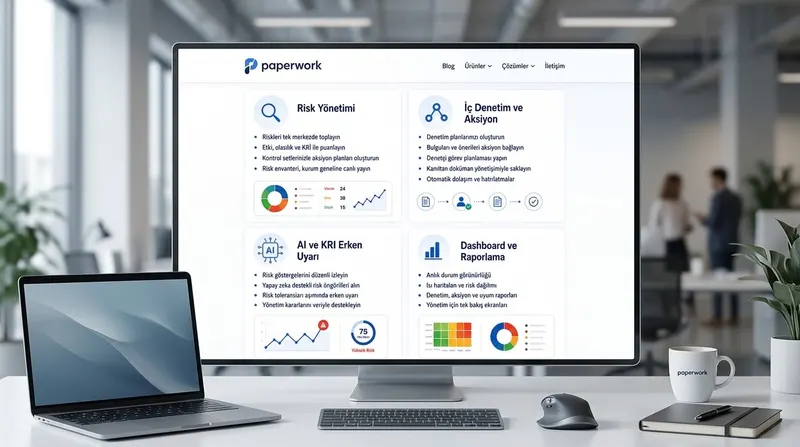
PaperWork Workflow similarly lets you monitor how your work runs at various levels in a current, accurate, complete and objective way. At the micro level you can observe employees' individual work-related requests and performance, while at the macro level you can analyze resource efficiency and work volume. With the reporting tool, you can analyze the performance of work moving through the system and identify problem areas. The problem may stem from inefficiency in how work is done, a lack of resources or a lack of training. Once the root cause is identified, it can be solved.
How Are Measurements Used?
Most of the time, these measurements are used as part of a Continuous Improvement Plan. Similar plans are used by many companies in different industries and go by different names, but the goal is the same: to measure and improve key factors.
It is important to share your measurements with both management and employees. Managers want to know what is happening, but employees need to know too. If they don't know how they are doing their jobs, they won't be motivated to improve. Besides, most suggestions on how to improve performance will come from them.
You can share team and individual results through different channels (the company intranet, wall boards and so on). You can use charts and tables to communicate metrics and measurements quickly, easily and visually.
Review your metrics and use them to guide your decisions. With the right metrics you can test whether your strategies are right. You can also use metrics to determine whether the changes you make to your strategies have improved the situation.
When the measurements made against your metrics show improvement, share that success with everyone and don't forget to reward those who contributed to it.
Measuring to manage:
. Define your metrics and benchmarks, publish them and update them as needed.
. Determine the soundest way to measure, and measure what matters.
. Reward employees who exceed their targets.
"Review your metrics and use them to guide your decisions. With the right metrics you can test whether your strategies are right. You can also use metrics to determine whether the changes you make to your strategies have improved the situation. When the measurements made against your metrics show improvement, share that success with everyone and don't forget to reward those who contributed to it."
Sources
https://www.ibm.com/think/topics/business-process-analysis
https://www.ibm.com/think/topics/process-optimization
https://dergipark.org.tr/tr/pub/mbdd/article/620837
Would you like to see PaperWork in your organization?
Request a Demo