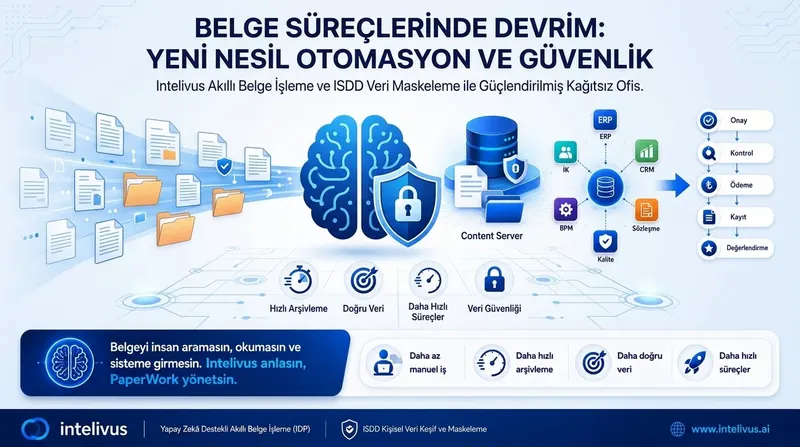
Integrated Low-Code Platform PaperWork BPM: A Revolution Beyond Classic Low-Code Solutions

As digital transformation accelerates, the need for technology solutions that optimize business processes and increase operational efficiency grows every day. Low-Code platforms play a critical role here by simplifying complex software development. However, traditional Low-Code platforms usually remain focused on application development alone and may fall short in providing the comprehensive integrations companies need. This is exactly where PaperWork BPM brings a breath of fresh air to the Low-Code world with integrated process and document management.
1. Integration vs. Fragmentation: Unified Solutions on a Single Platform
Classic Low-Code platforms are basically designed for rapid application development. But companies' needs are not limited to building applications. They often have to use different software for functions such as process management, document management, risk management and analysis, quality management, business intelligence, process mapping or supplier relationships. This leads to data and documents being collected in many different applications, integration costs and operational complexity.
PaperWork BPM solves this problem at its root. It combines solutions such as process mapping, document management, artificial intelligence (AI), business intelligence (BI), supplier management, and quality and risk management on a single platform. For example, while automating a procurement process, you can at the same time monitor supplier performance, manage contract documents and analyze risk scores. While classic Low-Code would require integrating three separate systems for this scenario, a single ecosystem is enough with PaperWork.
2. A Revolution in Document Management: An Approach Intertwined with Processes
On traditional platforms, document management usually remains a simple storage area. Yet documents at the center of business processes (contracts, reports, quality documents) only become meaningful when they are integrated with processes. PaperWork BPM integrates documents into dynamic process flows, offering automatic version control, approval chains and role-based access.
For example, in a quality audit process, the related documents are updated automatically and notifications are sent to stakeholders. While classic Low-Code requires an external DMS (Document Management System) integration for this, all these features are built into PaperWork.
3. Artificial Intelligence and Business Intelligence: Tomorrow's Analytics Inside the Platform
AI and BI have become essentials of the modern business world. However, most Low-Code platforms depend on third-party integrations to support these technologies. PaperWork BPM stands out with built-in artificial intelligence and business intelligence solutions. By analyzing the data in your processes in real time, you can find and fix problem areas.
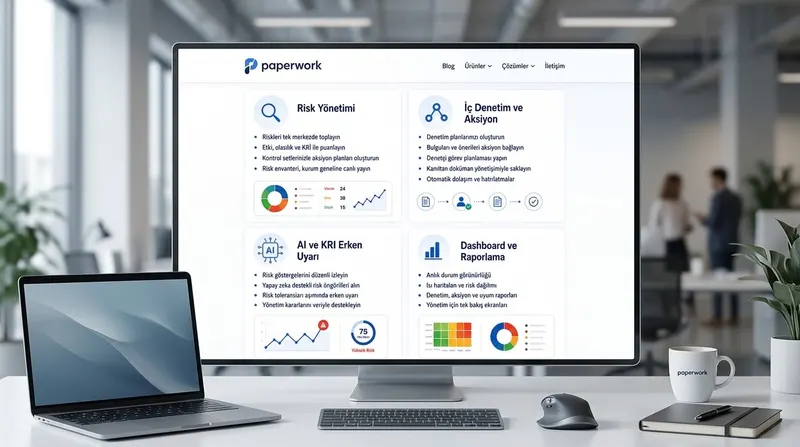
For example, an AI integrated with the risk management module can calculate the probability of a project delay and alert you. BI dashboards visualize your supply chain performance in real time. Classic Low-Code would require additional tools for analysis at this depth.
4. Specialized Modules: Quality, Risk and Supplier Management
Classic Low-Code platforms usually focus on basic CRUD (Create-Read-Update-Delete) operations. PaperWork BPM, by contrast, comes equipped with modules tailored to industry needs:
- Quality Management: ISO standards compliance, audit traceability, corrective actions.
- Risk Management: Scenario-based risk scoring, automatic alert mechanisms.
- Supplier Management: Performance criteria, contract management, payment tracking.
These modules can be used directly within the platform without writing code from scratch. For example, you can easily model a supplier evaluation process with built-in KPI templates.
5. Process Mapping: Visual and Dynamic Modeling
Process mapping is critical for optimizing workflows. PaperWork BPMMAP, which lets companies visualize and control their processes, provides an environment where process analysts and technical teams can work together.
Classic Low-Code needs a separate application for process modeling and documentation.
6. Cost and Time Savings: One Platform, Unlimited Solutions
Using multiple software products not only increases costs but also makes coordination between teams harder. PaperWork BPM's integrated ecosystem meets all needs with a single platform. Setup time shortens, training costs fall and data loss between systems is eliminated.
7. Scalability: Flexibility for Growing Companies
PaperWork BPM offers a flexible infrastructure at every scale, from SMEs to large enterprises. Thanks to its modular structure, you can add new functions as your business grows. In classic Low-Code, this flexibility usually requires code-based customizations.
Why Is PaperWork BPM One Step Ahead?
By combining the speed of Low-Code with integrated process and document management, PaperWork BPM offers companies holistic digital transformation. Unlike classic Low-Code platforms, it does not stop at application development; it also brings critical functions such as quality, risk and supplier management under one roof.
Instead of losing time and resources by using a different application for every job, companies can now manage all their processes in the PaperWork ecosystem. For more information, visit www.paperwork.com.tr.
The future of digital transformation runs through the power of integration. PaperWork BPM is shaping that future today.
Sources
https://www.gartner.com/reviews/market/enterprise-low-code-application-platform
https://www.ibm.com/think/topics/low-code
https://www.ibm.com/think/topics/low-code-vs-no-code
Would you like to see PaperWork in your organization?
Request a Demo