| Gürcan Yücel, Software Director |
Do you like listening to music? I am not one of those people who always walk around with headphones on, but I really enjoy listening to music that suits my mood in good times. For a while now I have been hooked on a group called "2Cellos." Don't be misled by the word group; as the name says, it is a giant two-person orchestra! What they do best is play the most familiar songs on the cello. They can even interpret the most famous Michael Jackson songs from our past on the cello. Today's songs with the cello of the past, the songs of the past with today's cello!
From an enterprise perspective, technology needs have grown so broad that it is now very hard to meet them from scratch. There are dozens, even hundreds, of companies that only build software infrastructure. Even while we are still planning software projects, the technology we have in mind may already have evolved. When you look at organizations, huge systems have been set up to meet their needs. On top of that, there are so-called "legacy" applications and integrations, custom-built, using technologies that no one has dared to touch for years and that no longer even have technical support. Moving data between systems, reshaping integrations as needs change, adding new interfaces and adapting old ones to new needs are the nightmare of many IT department managers. On the other hand, there are also the risks of custom software projects and the difficulty of managing and maintaining them. For these reasons, large companies continue to run their operations around Excel.
This is exactly where the need arises to integrate the best-known technologies of the past with today's technologies. You need a conductor in the middle who manages data between all systems, responds just as quickly to fast-changing needs, monitors and measures data, and ensures continuity. This is exactly where PaperWork comes in.
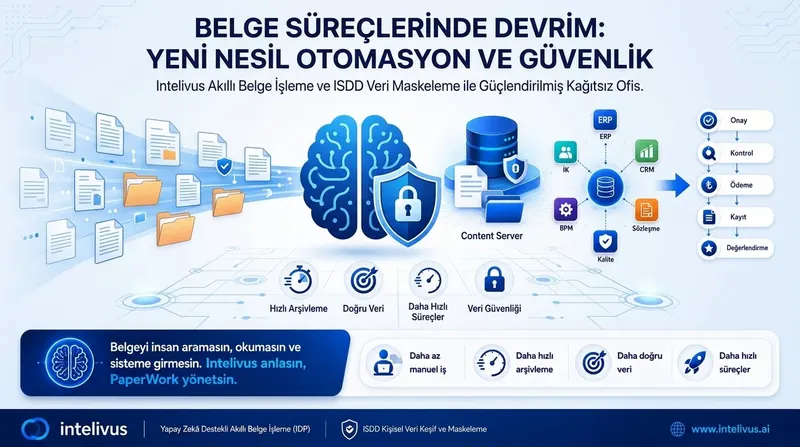
- PaperWork is built on a multi-tier architecture. All business logic has been moved to an application server called Content Server. The business logic on the application server includes 2 development layers. The first consists of .NET libraries. PaperWork's user interfaces were developed on this library. In other words, all functions in the user interfaces are open, through this development layer, to building new interfaces and integrating with external systems. PaperWork also includes a Web Service library built to SOAP 1.2 standards so it can integrate with other technologies. The SAP interfaces and PaperWork Mobile interfaces were implemented using this technology. In addition to all its functions, the development layer has an embeddable HTML5 viewer for providing document viewing functions within other applications' interfaces. This viewer is also used in the SAP interfaces and mobile applications. The development library comes with development guides and is open to end users.
- PaperWork users can be integrated with external systems. With a technology called UserPlugin, users can be synchronized and authenticated with any platform, including a database table. Multiple user sources can be used in the same system at the same time.
- PaperWork may need to access external system databases during its operations. To enable this, it has a technology called DBPlugin. The external database connection is developed as a library. In the architecture, this layer can be used from all electronic forms and workflow objects to operate directly on databases.
- PaperWork has an advanced Web Service invocation library. In workflows, web service methods can be called without writing any code, using only interface definitions. In electronic forms, a web service can be called by writing a single line of C# code.
- Starting with version 4.0, PaperWork also allows interface integration. PaperWork electronic forms can provide visual integration with interfaces built in any technology. Workflow forms in particular can be embedded in both HTML applications and native applications, all functions written in the forms keep working, and functions such as required-field checks can communicate with the calling application. PaperWork's mobile applications and the PaperWork Outlook add-in were developed using this technology.
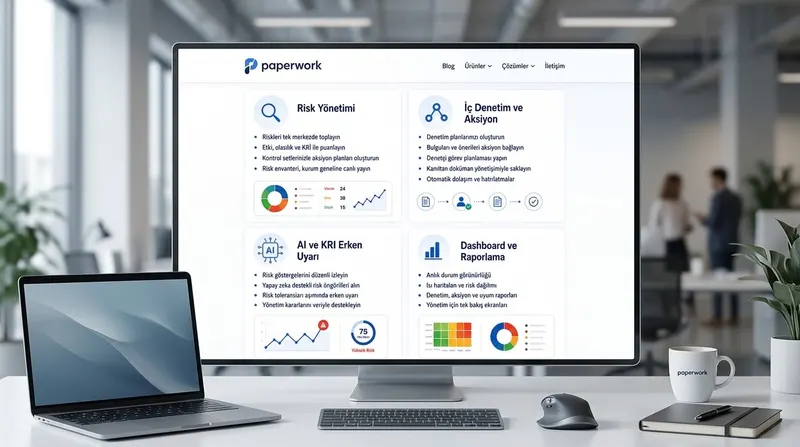
In short, PaperWork was built to integrate. Its own architecture can exchange data with any platform. Any platform can also call PaperWork functions and integrate at the electronic form and HTML5 viewer level. Thanks to the advanced reporting, monitoring, KPI and SLA functions in PaperWork, all systems can be monitored and managed from a single point.
Here's hoping you can give great concerts that integrate the past and the present in today's world…
Sources
https://www.ibm.com/think/topics/api-integration
https://www.ibm.com/think/topics/low-code-integration
https://www.ibm.com/think/insights/data-integration-challenges
Would you like to see PaperWork in your organization?
Request a Demo