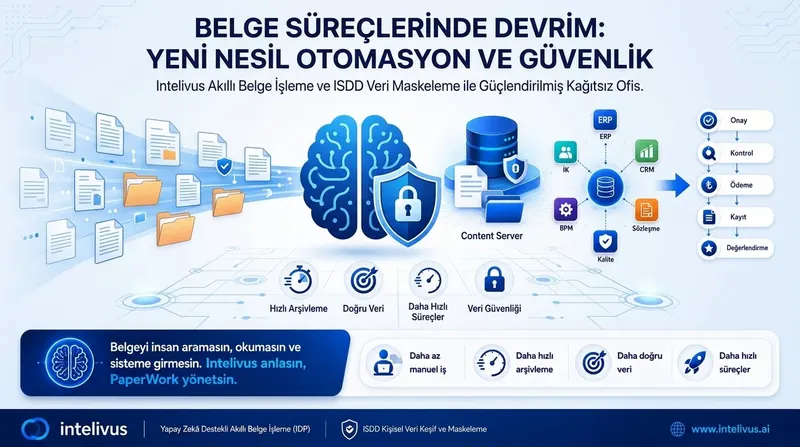
In today's rapidly digitalizing world, businesses are looking for innovative ways to optimize operations, increase efficiency and reduce costs. One of the technologies with the greatest potential to achieve these goals is the use of artificial intelligence (AI) agents in business processes to reduce human intervention. AI agents are software units designed to automate tasks that people usually perform manually and to carry them out more intelligently. This technology gives businesses not only faster processes but also greater accuracy, consistency and efficiency.
The main role of AI agents in business processes is to automate repetitive tasks, reduce human error and increase overall productivity. For example, in customer service, AI-powered chatbots can answer frequently asked questions and free human employees to deal with more complex issues. In supply chain management, AI agents can manage stock levels more efficiently and forecast demand far more precisely than manual processes. Solutions like these help businesses use their resources more effectively.
AI agents are not limited to automating basic tasks; they can also continuously improve and learn through machine learning algorithms. This allows them to become more effective over time and contribute more to business processes. For example, a chatbot can give more accurate and contextual answers over time using data from customer queries. This not only improves processes but also increases customer satisfaction.
Another important characteristic is the flexibility of AI agents. While traditional human-centered processes have limited scalability, AI agents can easily handle growing workloads and adapt quickly to changing requirements. As businesses grow or market conditions change, AI agents can keep up with these changes without requiring restructuring or training. This flexibility is a critical advantage in constantly changing, highly competitive business environments.
In conclusion, AI agents have the potential to revolutionize business processes. By automating routine tasks, minimizing human error and improving their performance through continuous learning, they offer businesses cost savings and operational advantages. In the age of digitalization, adopting this kind of technology is becoming increasingly important for businesses to stay competitive and move forward successfully.
Understanding Human Intervention Points in Business Processes
Human intervention points are the stages in business processes where human input, decision-making and interaction are critical. These points usually arise in tasks that are complex, unpredictable and sensitive in nature. Human intervention is important to ensure that processes run correctly and achieve the desired results. For example, in customer service, resolving complex customer complaints or offering personalized recommendations requires human intervention. In manufacturing, human skills come into play in situations such as quality control, troubleshooting machine problems and adjusting production lines in real time.
Advantages of Human Intervention
One of the main advantages of human intervention is that people bring skills such as empathy, creativity and problem solving. In customer service, for example, empathy is critical for understanding customers' needs and responding in a satisfying way. In R&D (Research and Development) departments, human creativity is needed to develop creative solutions or overcome technical challenges. These unique human qualities make people indispensable in certain business processes.
Challenges of Human Intervention
However, human intervention also brings certain limitations and challenges. People are naturally prone to error and are affected over time by factors such as fatigue. This can reduce the accuracy and efficiency of processes. Human intervention can also create variability in processes; different individuals may perform the same task in different ways, leading to inconsistencies. This is a particular problem in industries where precision and consistency are critical.
Another important challenge is the cost of human intervention. Hiring, training and meeting the ongoing needs of qualified employees places a significant financial burden on businesses. These costs can be a major barrier, especially for small and medium-sized businesses with limited budgets. Human intervention can also make manual processes slower, creating a competitive disadvantage in time-critical work.
AI Agents as an Alternative to Human Intervention
To balance the advantages and challenges of human intervention, businesses are increasingly turning to AI agents. The next section will cover how AI agents can effectively replace human intervention points in business processes, the advantages this brings, and the strategies that can be applied to carry out this transformation successfully.
Sources
https://www.ibm.com/think/topics/agentic-workflows
https://www.anthropic.com/research/building-effective-agents
https://camunda.com/blog/2025/03/essential-agentic-patterns-ai-agents-bpmn/
Would you like to see PaperWork in your organization?
Request a Demo