| Fevzi ÖZTÜRK, Operations Director |
Introduction
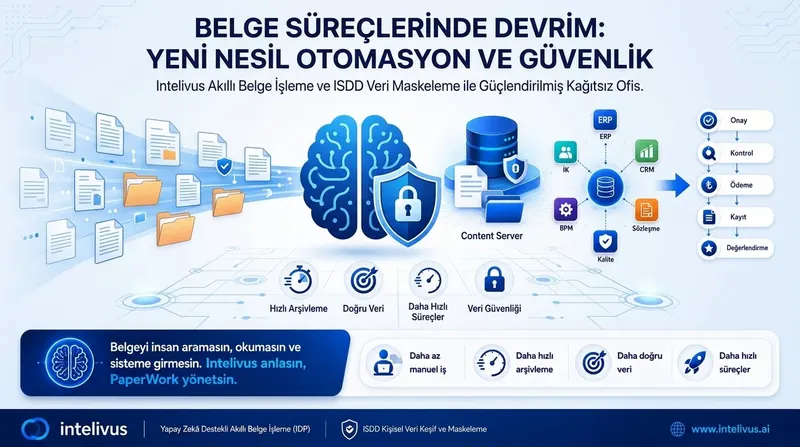
To succeed with business processes, it is essential to understand and address the link between document and content management and process management.
Running business processes successfully usually depends on acting on accurate information from documents. For example, customer service representatives cannot resolve issues effectively without immediate access to all previous interactions with the customer in question; hiring a new employee can involve multiple documents concerning departments such as human resources, security management and finance; internal policies must be written, reviewed and approved before they are published, and so on.
Content and document management systems can be used without automated business process management capabilities. However, when content and process are run together, organizations can ensure that accurate information is used for their decisions and that traceability is in place for regulatory compliance.
There are two main ways to use process management together with document management:
Document lifecycle management is itself a process that can be managed with process management tools. A controlled process for creating, changing, reviewing, approving, updating and distributing documents not only ensures discipline and rigor but can also significantly reduce delays, costs and errors compared to a manually managed process.
Documents can take part in operational processes. Every process in which an organization interacts with customers, suppliers and employees relies on an exchange of information through documents. This information can be application forms, purchase quotes, marketing campaigns, invoices, contracts and so on. Whatever their type, documents hold a critical part of the information needed to start, advance, pass on or complete a business process.
Choosing the right type of process management for your BPM / ECM environment
There are three main types of process management systems that can be set up together with a document management system:
Document Lifecycle Workflow
A document lifecycle workflow is directly related to managing the lifecycle of documents. In this type of application, simple workflow routing is used to manage requests to create, change, review, approve, publish or print documents. Several people usually take part in reviewing documents or contributing to their content. In this case, the process being managed is the lifecycle of the document itself.
Ad Hoc Task Routing
Simple process management can be used for simple, unpredictable operations that cannot be clearly and precisely defined, or for department-level operations where all the information is held by a few people. In this case, documents are routed manually within the organization and circulated electronically between people.
The workflow system keeps the sequence of operations and records them, but it does not control the flow by providing predefined automatic routing.
Process Management
With process management, complex business processes, usually made up of several sub-processes, can be executed and managed. This type of application is broad enough to use a combination of human and system activities within the process and
their relationships with one another. Process management can handle high value-added processes that benefit from continuous improvement, as well as dynamic processes that change frequently.
In addition, the flow is controlled by the process definition, automation is managed by the system, and processes are clearly defined and documented. In this case, content and documents are used to support decision-making in the process or to document the outcome and audit trail of the process.
Connecting your content management and BPM solutions
Given how critical both content and process are, there is often debate over which type of system should be used for the solution: Document / Content Management (DM / ECM) or Business Process Management (BPM). In most cases, both applications are equally important, and both become more valuable when they work in sync.
In reality, this decision is largely made based on the technologies already in place in organizations. However, if you have the chance to look at both without the constraints of your existing IT infrastructure, we try to combine as much, or just enough, functionality as possible from the two main sets of technology available:
1. Enterprise Content Management (ECM) Systems
These are controlled content repositories that enable documents and other content to be securely stored, managed, searched, classified and retrieved.
Enterprise Content Management solutions essentially provide the following features:
. Creating or capturing content automatically or manually and keeping a single copy that can be used in multiple processes.
. Lifecycle management: collaborative document creation (check-in / check-out), controlling version history and the transition of content between stages.
. Security: defining and controlling user or group access to content depending on its status.
. Classification: classifying content by metadata, folder/cabinet file systems or in relation to other content.
. Access: finding, retrieving, reusing or publishing content by end users or through integration with other systems and business applications.
ECM applications usually include simple workflow functionality that may be enough to meet basic needs.
2. Business Process Management (BPM) Systems
Business Process Management (BPM) systems are comprehensive systems that automate, manage, monitor and therefore improve your business processes quickly and at low cost. A true BPM system lets you run the entire process lifecycle for both human-centric and system-based processes with a single integrated solution.
Process Management solutions essentially provide the following features:
. Modeling: a powerful process modeling tool that covers business strategies, operations and related systems, taking all enterprise process relationships into account.
. Design: design of process forms and workflow design for process automation.
. Process Automation: business rule engines, workflow and integration technologies to build a seamless, efficient process across multiple users, applications and databases.
. Integration: greater efficiency and control in processes by reusing existing and legacy systems integrated with BPM.
. Manage and Monitor: participation in processes, process management and monitoring.
. Reporting and Analysis: process reporting and analysis capabilities based on live process data to identify potential problems or areas for improvement.
. Simulation and Improvement: simulating and modeling process changes based on real transaction data; forecasting future trends with data based on past performance; identifying which process changes will have the most impact and updating the process model.
BPM systems not only support the entire process lifecycle but also allow a wide variety of business processes to be built and managed on a single platform, and they support highly dynamic business processes. Most of these functions are not available with the simple workflow features found in ECM systems.
Choosing the most suitable technology
There are several approaches to choosing an integrated system of this kind:
Best-of-Breed Selection
In this approach, the organization already has an ECM or BPM system and decides to select a complementary system and integrate the two.
The advantage of this approach is that each system can be evaluated separately and the best system can be chosen for each. This way, the best choice can be made by evaluating the organization's requirements and its existing systems.
The disadvantage is that the integration between the two systems becomes a project in its own right, with the typical delays, risks and significant development costs of projects.
Integrated Platform
In this approach, the organization can choose a solution that offers both ECM and BPM.
The advantage is that integration risks are reduced and business solutions can be put to use much faster, without long and costly integrations.
The disadvantage is that the chosen solution comes from a single vendor and it is harder to get the detailed functionality that best-of-breed solutions provide.
Benefits of an integrated BPM and ECM system
Although Document Management and Process Management technologies can be used independently, combining them in a single system creates a seamless relationship between content and process at every level of the organization. Delivering the right information to the right people at the right time in a usable form is critical to optimizing organizational performance.
This is only possible when users can access the right content on time, and use, manage and analyze that content within a process.
Key benefits of combining ECM and BPM capabilities:
. More control: greater visibility and control over processes and the valuable enterprise content within them;
. More visibility: monitoring the status of business processes, identifying bottlenecks, analyzing key metrics, detecting exceptions and improving the execution of important business processes across the organization;
. Tangible operational results: reducing costs, increasing efficiency and improving employee performance with fewer errors;
. Simply put, an integrated ECM and BPM platform ensures that content is managed properly and that decisions and actions within a process use the latest and best information available. Used together, these technologies let you run document-intensive processes quickly, effectively and in a controlled way, and create new opportunities for greater efficiency and collaboration across the company.
In conclusion, the combination of enterprise content management and content management turns your documents and content into valuable corporate assets and helps you make faster and better business decisions.
Sources
https://www.ibm.com/think/topics/document-management
https://www.ibm.com/think/topics/document-workflow
https://www.ibm.com/docs/en/cloud-paks/cp-biz-automation/25.0.1?topic=capabilities-content-services
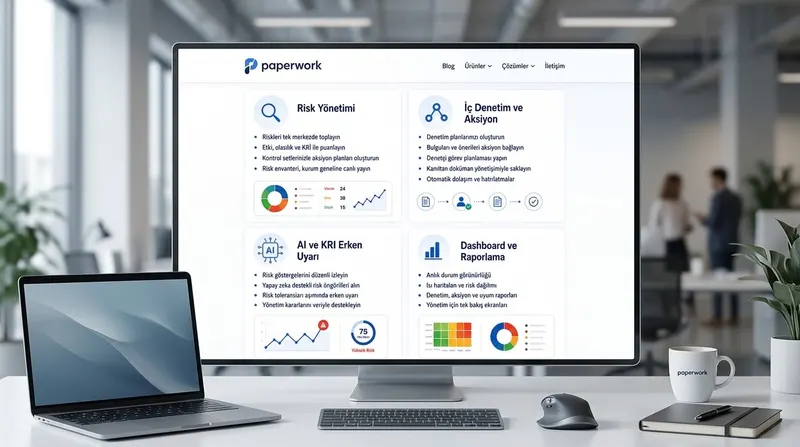
Would you like to see PaperWork in your organization?
Request a Demo