| Gürcan YÜCEL, CTO |
As an engineer, I have always been amazed that scientists in most of the social sciences manage to agree with each other. Like I said, that's the engineer's mind for you. For example, a group of scientists divided human life into 4 major stages: childhood, youth, adulthood and old age. They also described these stages as periods in which human nature is separated by sharp lines. How is it that nobody came along and tried to squeeze other stages in between? What about adolescence, which we all live through twice? Yes, twice. The first is our own adolescence, the second is our child's. The helplessness is usually the same 😊 And what about the midlife crisis at 40? Expertise at 50? Wisdom at 60?
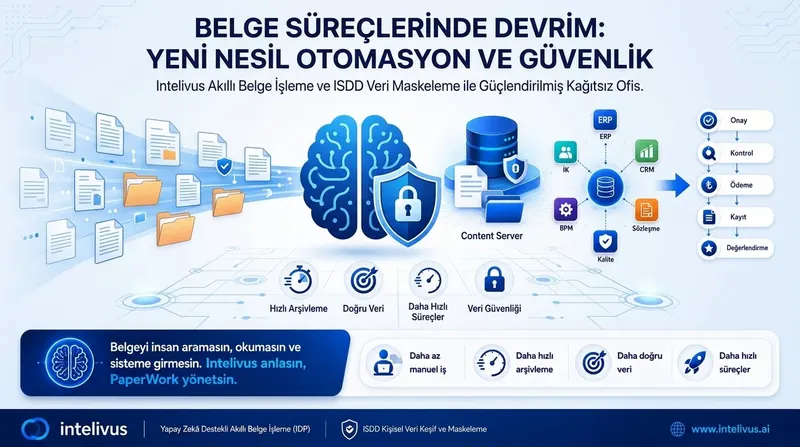
If you turn your attention to companies, they go through similar stages. From an IT perspective, first comes the software that meets the finance requirements mandated by law. Right after that comes Excel, which runs the entire world economy. After growing a bit, ERP. Then the "I can no longer manage customer relationships in Excel, I need a CRM" stage. "I have started producing lots of documents, and even more are coming from my customers. Where do I share all these documents?" Document archive systems. "Archiving alone isn't enough, I should get document management." "I need a 360-degree view": workflow systems. The years of youth flowed by like water.
Did you notice? Even defining companies' stages purely from an IT perspective is very hard for an engineer. As you read, I'm sure many of you are thinking "he left this out" or "why is that even needed?" Or you think these transitions cannot be clearly named. To simplify things a bit, let's shorten the stages like the social scientists did: I implemented SAP, I launched my CRM platform, I got my ECM application running, and now I can benefit from BPM. There you have it: 4 systems and 4 different disciplines, separated by knife-sharp lines. So how do they talk to each other? More importantly, why do they have to talk? Do they have to talk at all? Isn't love about understanding each other? If we have started asking these questions, we have reached the midlife crisis at 40. We have everything, yet it feels like we have nothing.
Let's start our needs with the finance department, the first one we set up. All those incoming invoices went into the archive system, but how do I link them to my SAP records? I spend my whole day on SAP screens; how can I compare a transaction's invoice with my record? When archiving my documents, do I have to re-enter some of the information I already entered in the SAP interfaces? I have made my entries, but how can I work without wasting time searching for documents? Some decisions relate to records, some to documents. How can I see them all in one organized place? Easy now: while I write this, you are lining up dozens of questions in your head and reading quickly to see whether I'll cover them too 😊
If we go question by question, this will take a long time. I suggest we skip ahead to expertise at 50 and analyze the structure we need. These are the problems we need to solve:
. We must not pull users away from the interfaces they are used to.
. We must give users back the time they spend archiving and searching for documents.
. We must be able to archive any kind of document from SAP interfaces, and scan documents in the same interfaces during archiving.
. We must list the documents of SAP records with simple navigation on the screens where users work, and preview documents on the same screen.
. We must not forget non-SAP users. They should be able to access SAP documents from other screens and link documents to SAP records when archiving.
. Record links alone are not enough; we must also be able to reach documents through full-text search, and when needed, go from a document to its SAP record.
. Archiving once is not enough; we must also support document versioning and be able to design the document lifecycle.
. We must use a central architecture while delivering all these ECM functions.
. We must be able to access the same archive from mobile devices and bring managers into the loop.
. Throughout all these operations, without setting security aside, we must apply the principle of "only those authorized, only as far as they are authorized."
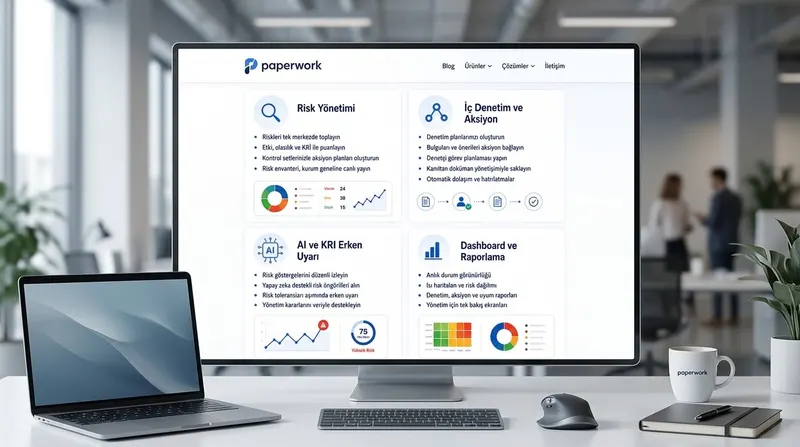
This is where PaperWork SAP ECM comes in. It is an integrated solution that works seamlessly with SAP screens, has web and mobile interfaces running on a shared architecture, and puts security first without disrupting the user experience or losing control. In short, it is the definitive cure for your problems and the only way to understand each other without having to talk.
And if you are wondering what happened to wisdom at 60, that is the subject of PaperWork SAP BPM. Model, measure, evaluate, manage…
Sources
https://dergipark.org.tr/tr/pub/ijshs/article/460859
https://www.ibm.com/think/topics/process-improvement
https://www.ibm.com/think/topics/workflow-automation
Would you like to see PaperWork in your organization?
Request a Demo