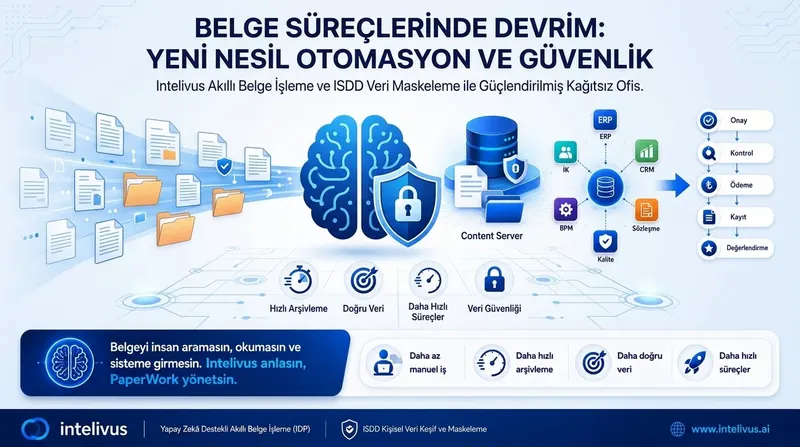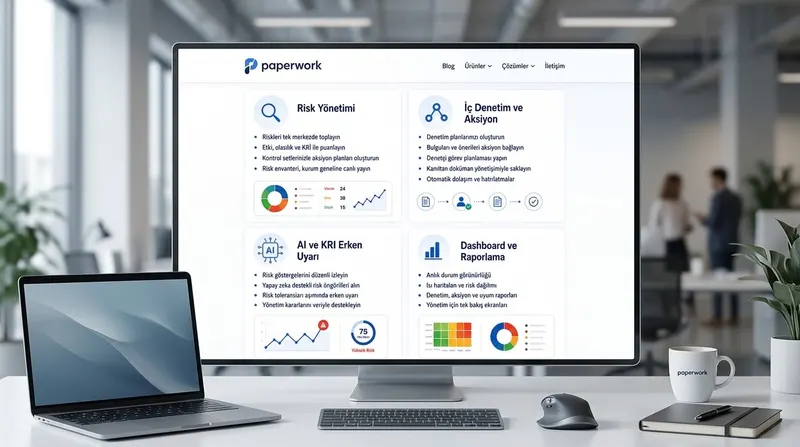
Electronic and printed documents are critical components of almost every business. We will try to explain the benefits of a document management system, the positive effects it can have on your daily operations, and the value of building ongoing awareness of them.
All organizations, large or small, whether they have offices around the world or a limited number of employees, must manage, organize, and protect their documents in a structured way.
The benefits of document management systems are almost endless. Used properly, they can improve your overall operations, lower your costs, increase productivity, secure your documents, improve collaboration, raise compliance levels and, above all, help you move to a fully digital workplace.
At its core, a document management system is a type of software that stores, provides access to, and distributes digital documents. Put simply, it lets you give your employees, customers, and dealers the information they need quickly and simply, minimize inefficiency, and achieve your business goals.
As most businesspeople know, keeping any business clean and organized at all times is quite difficult, so there has always been a need for systems that help a company run in the most organized way possible.
Yet research shows that several large businesses around the world have suffered significant financial losses because of unnecessary time and money lost in company management. The good news is that it is possible to avoid these office risks by switching to one of today's online document management software solutions, which allow a business to operate as smoothly as possible.
In this article, we will explain what a document management system is and discuss the 15 most important ways these systems help improve your business processes.
What Is a DMS?
A document management system is a system that lets you organize, store, and access all the documents a company uses on a daily basis. It lets you manage the entire lifecycle of digitized documents, from creation to distribution.
Besides creating paperless offices, it helps you put your business operations in order and scale your important business activities.
Because all documents from various sources are ultimately archived in a digital repository or destroyed according to various retention regulations, this system should be seen as a core solution for any digital business.
The 15 Most Important Benefits of a Document Management System
Not all document management solutions are the same. Understanding what makes a well-designed platform is critical for every modern organization, whether small, medium, or large. Investing in a document management system and digitizing your paper documents not only delivers a good return on your investment, it also lets you build a solid foundation that helps your business grow by optimizing procedures and workflows.
Here are some benefits of document management systems that may interest you:
1. Less Physical Space
Keeping physical records requires a lot of storage space, maintenance, cabinets, and similar resources. All of these costs drop dramatically after moving to the digital world.
According to one study, physical document storage takes up almost 15% of total office space. Considering that an average office in the US costs 3000 dollars per square meter, a considerable amount is spent on storage space alone.
In today's digital world, digital document archiving is a much more cost-effective and convenient solution.
2. Lower Operating Costs
Modern businesses are always looking for ways to reduce their costs. Going digital by giving up paper documents and implementing a system helps achieve this goal.
When used correctly, a DMS can ensure that businesses never lose a document again and can access, protect, and share documents across departments faster.
Recent research shows that filing a document costs about 20 dollars, finding a misfiled document costs 120 dollars, and replacing a lost document costs 220 dollars.
If your document management platform has a search feature, these costs drop sharply and finding documents becomes direct and fast.
3. Easier Version Control
How many times has a colleague accidentally written over changes you made to a document? Or how many times have you made a business decision based on an old version of a document?
Document version control is one of the key components of a document management strategy. Without control, disorder takes over your business.
One of the most significant benefits of moving to a system is that it guarantees you always work on the latest version of a document. These systems do not allow simultaneous changes to documents; in other words, a document is locked while someone is updating it.
What is more, document management systems automatically number document versions according to built-in parameters.
4. Better Security
Document security is a top concern, since missing information or exposure of sensitive information can have a major impact on a company's success.
For various reasons, printed documents can fall into the wrong hands, be misplaced, or even be destroyed by mistake. Digitized documents, on the other hand, require clear and specific operations to be stored and processed properly.
Reputable solutions usually include a feature for every stage of document security, from encryption and watermarks to digital rights management and restricting access to authorized roles only.
5. Efficient Collaboration
Document management systems provide collaboration, visibility, and accessibility. As a result, they make collaboration easier both within the business and with third parties.
Most solutions offer various collaboration methods, which can be simple or complex.
Employees can easily collaborate by adding a link to a document, commenting, and taking actions. To strengthen collaboration, users can work together on an attached document in real time, edit text, or add notes.
6. Easy Access
People can now work from anywhere in the world, which makes it essential for companies to provide instant access to working documents.
One of the most significant benefits of using a document management system is that it keeps the material users need at their fingertips.
7. Regulatory Compliance
Depending on their industry and line of business, companies must comply with various laws and regulations.
A robust system helps your company comply with rules such as KVKK (Turkish Personal Data Protection Law) and ensures that documents are stored according to a clearly defined strategy.
8. Streamlined Document-Centric Processes
Managing and digitizing documents are two of the most important components or criteria in adopting a digital document flow.
Most businesses need hundreds or even thousands of documents to keep their daily operations running. These documents often travel back and forth between departments, employees, customers, and suppliers for approvals, signatures, and changes.
Using a document management system to simplify document-centric activities can bring significant benefits to your company's operations.
9. Advanced Document Indexing
Document indexing is the process of tagging documents in various ways so they can easily be searched for and found later.
One of the most important benefits of a good document management application is that it creates an index.
Every business is different, and deciding which indexing criteria to apply is a vital decision that lets you make the most of your new digital data.
10. Easy Data Capture
Some solutions include a sophisticated data capture module that lets you extract critical information from a document scanned during digitization.
To achieve the most accurate results possible, this capture process is supported by artificial intelligence capabilities.
11. Integration with Other Systems
Once documents are stored in a DMS, they can also be made accessible to other applications.
This is a big advantage if you need to convert a document into a new form, or if you work with a document that requires access permission after it has been saved to your system.
12. Advanced Search
The ability to identify documents quickly is the most important feature in employees' daily tasks.
Most solutions include a powerful and comprehensive search feature that lets employees search for documents based on previously collected data, metadata, and information in attachments.
13. More Reliable Backups
We hear many stories of businesses losing important documents because of natural disasters, fires, and other accidents.
A DMS with features such as central storage, digitization, and archiving offers advanced backup and recovery solutions in case of an unexpected event.
14. Audit History
Being able to manage documents in a DMS throughout their lifecycle is critical. Viewing the full history of all actions taken is one of the most important functions. This feature lets you see who read a document in the DMS, who made improvements, who downloaded attachments, and similar details.
15. Eco-Friendly Solutions
A DMS makes your business greener by reducing the need for paper in your office. Thanks to a DMS, you save more than 3 trillion trees every year. A green office is a company future generations will prefer.
Sources
https://www.ibm.com/think/topics/document-management
https://www.ibm.com/think/topics/document-workflow
https://www.ibm.com/docs/en/cloud-paks/cp-biz-automation/25.0.1?topic=capabilities-content-services
Would you like to see PaperWork in your organization?
Request a Demo