| İlhan Kesken, PMP, Project Office Manager |
Without going too deep, let's start by covering a few basic concepts.
Because the term Business Process Management (BPM) has been in the literature for a long time, it is widely known as a concept. In general, processes transform inputs into outputs by passing through a chain of activities. They can be classified as core processes and support processes. Core processes are usually an organization's value-creating activity chains; they are mostly triggered by interaction with actors outside the organization (suppliers, customers, etc.), and their outputs are mostly delivered to consumers outside the organization. Support processes, on the other hand, mostly complete their lifecycle within the boundaries of the organization. They do not produce outputs and/or results that our customers or consumers benefit from directly.
When breaking business processes down into their components, along with the structural elements that make up the process (transitions between process activities, data flow dependencies, and the business rules that frame and shape how the process works) and the process goals, you also need to bring seemingly secondary elements such as resources, inputs and outputs into the equation.
The concept of 'management' is a cross-component function: it controls the use of resources and orchestrates operational activities within the organization. The management function has a lifecycle made up of phases such as planning, organizing, staffing, directing, controlling and budgeting. The discipline of Business Process Management (BPM) is the application of this cycle to the organization's business processes.
In short, Business Process Management (BPM) is a systematic approach that analyzes, improves, controls and manages processes in order to continuously raise the quality of products and services.
Simply put, the goal is to align the organization's processes with its strategic goals and to optimize business processes to support those goals.
The process lifecycle begins with defining organizational and process goals and constraints. The purpose of this phase is to discover processes and identify the factors that will influence the design before creating it. These factors include the aims and outputs of the processes. They can be both inside and outside the organization. A full analysis of organizational and environmental factors is essential for building a complete list of the parameters and constraints of process designs. At the end of this phase, the models of our processes are in place.
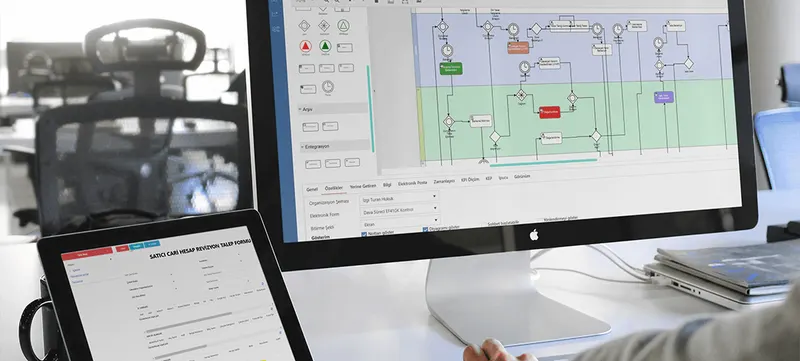
The implementation phase moves the process models that have been created into operational environments. In these environments, process instances (flows) created from the models are executed and their performance is monitored in real time. The monitoring and reports produced for control purposes while processes run are reviewed in the later evaluation phase, where trends and issues are identified. Feedback and corrective plans are built on this information.
Without going into detail, this brings us to the end of what I wanted to say about the Business Process Management (BPM) Lifecycle based on its basic concepts. Until we meet again in another article on business process management, take care.
Sources
https://www.ibm.com/think/topics/business-process-management
https://www.ibm.com/think/topics/process-mapping
https://www.ibm.com/think/topics/process-improvement
Would you like to see PaperWork in your organization?
Request a Demo