| Tolga Eşiz – Sales Director – GGSoft |
New technologies, changing and evolving at a dizzying pace, are changing the way companies do business just as quickly. To stay competitive, companies must change how they work, and while this rapid change makes that difficult, it also creates new opportunities.
Industry 4.0, one of today's hottest topics, is radically changing business habits and practices not only in industries that benefit from IoT technologies but in every industry. In his book "The Fourth Industrial Revolution", Klaus Schwab, founder and chairman of the World Economic Forum, argues that in the new era opened by Industry 4.0, systems rather than technology will be decisive, and technology will strengthen people's decision-making skills.
Viewed from this perspective, companies that adapt quickly to change will gain a competitive advantage and shape the competition with new opportunities. Companies that are slow to act will inevitably lose market share, profitability and productivity to their competitors.
It is hardly possible to stand out from the competition without bringing into corporate processes the systems and decision mechanisms needed to process the huge mass of data created by changing and evolving technology. Michael Porter, professor of strategic management at Harvard University, sums up the essence of this change very well:
"It is not the rules of competition that are changing, but the technologies companies use. Companies that adapt quickly to this change will be able to carve out a distinctive position in their industries and gain a competitive advantage."
Do you think the time has come for you to change too?
Ask yourself these questions to understand where you stand:
• Does work stall when it passes from one department to another?
• Is there a system that connects company departments and manages information exchange and task assignment between them?
• How much time do you spend searching for, finding and sharing the documents business decisions are based on?
• Can you easily access the documents you need during a process?
• How much time do you spend planning work and assigning tasks?
• How do you check that the tasks you assign to your colleagues have been completed?
• Can you measure the performance of the employees involved in your processes?
• Can you easily change your workflows as conditions change?
• Can you get real-time information on the status of work in your organization?
• Do your systems work together in an integrated way? What happens when a task requires data from different systems?
With traditional methods such as ERP applications, Outlook and phone communication, you cannot solve the problems above efficiently. Trying to adapt workflows on top of ERP and other applications is both costly and very time-consuming. Revising processes again as conditions change is very difficult. Given this situation, what should you do?
At its core, you can solve these problems with a workflow application as part of your digital transformation.
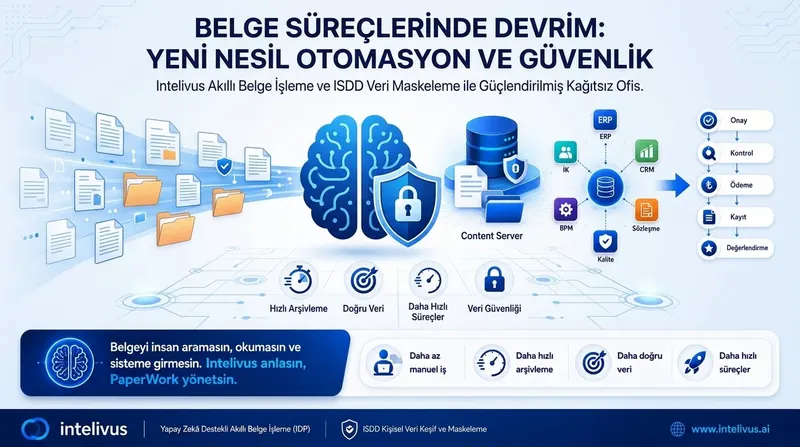
Workflow applications move processes traditionally run on paper, email and applications such as MS Excel into a digital environment with a defined standard and discipline. Working integrated with enterprise applications, they take over workflows and give your organization a unique digital experience.
How does workflow contribute to a business?
Our lives are changing very quickly, and we need to respond to changing conditions and adapt immediately. A study by Boston Consulting Group lays bare the incredible increase in the speed at which technology enters our lives.
This incredible speed is reflected in companies in the same way. As a result, companies want changes to their processes to happen immediately too. A tool that aims to deliver this speed must create efficiency and automate work done by people in a digital environment. It must let you track in real time where work is done, how long it takes, overdue items, individual performance and the status of work. It must be able to identify the problematic steps in processes.
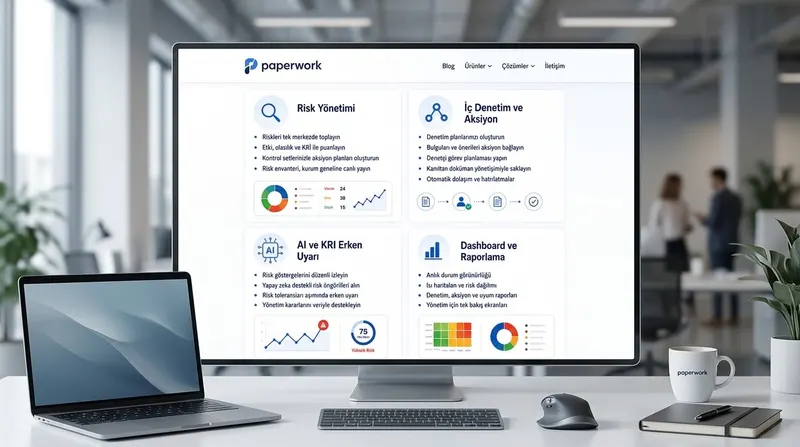
With PaperWork, the enterprise process and workflow management application, you can easily design your workflows and use them integrated with your enterprise applications. You can immediately adapt your flows to changing conditions, monitor them and track performance. With PaperWork workflow, you manage your processes independently of applications and can change them whenever you want. Put simply, with the approach below you can easily move your workflows into a digital environment.
Examine every department in your organization. Move every process carried out by your employees using traditional methods into a digital environment and standardize it.
• If different applications are involved in a process, integrate them with your workflow application.
• Review the workflow status and KPI reports provided by PaperWork and analyze the performance and efficiency of your processes.
• Based on the insights from your analysis, make changes to your workflows that increase efficiency.
This approach makes change part of your company culture. With this approach, PaperWork adds invaluable value to your organization.
Would you like to see PaperWork in your organization?
Request a Demo