Why Do Companies Avoid Investing in BPM and Fall Back on ERP? The Reasons and the Solutions

Istanbul, Türkiye: In today's competitive business world, where efficiency and agility are vital, many companies rely solely on Enterprise Resource Planning (ERP) systems to manage their business processes. Yet ERP systems are not suitable for every business process, and they can turn designing and changing processes into a software project, costing companies millions of liras. According to experts, complementing ERP systems with a low-code Business Process Management (BPM) solution like PaperWork is the most effective way to increase efficiency and reduce costs. So why, despite this clear benefit, do companies avoid investing in BPM systems?
The answer lies in companies' habits, perceptions and strategic priorities. Here are the main reasons why companies do not invest in BPM systems and try to solve all their processes in ERP:
- The Desire for One System, One Truth: Companies usually tend to collect and manage all their data in a single central system. ERP systems deliver on this promise of being the "single source of truth" by offering core business functions such as finance, human resources and supply chain in an integrated structure. This approach aims to prevent data silos and make coordination between departments easier. Seeing BPM as a separate system can be perceived as an exception to this central structure.
- Perceived Complexity and Cost: Setting up a new BPM system, integrating it with the existing ERP system and getting employees to adapt to it can be seen as additional cost and complexity. Companies with limited IT resources in particular may consider their existing ERP systems "good enough" and avoid investing in new technology.
- Resistance to Change and Uncertainty: Every new technology implementation brings organizational change with it. Employees and managers may need to change the ways of working they are used to. This can create resistance, especially to the process-oriented approach that BPM brings. Uncertainty about the return on investment (ROI) of BPM can also leave decision-makers hesitant.
- Guidance from ERP Vendors: Many large ERP vendors prefer to offer solutions to their customers within their own ecosystems. By claiming that every need can be met with their own ERP modules or customizations, these vendors can keep companies away from external BPM solutions.
- Failure to Grasp the Strategic Importance of BPM: In some companies, top management may not see business process management as a strategic priority. Focusing on short-term operational goals instead of the long-term benefits of process improvement can cause strategic investments like BPM to be postponed.
ERP and Low-Code BPM Integration: An Efficiency Boost
Experts agree that combining the core data and transaction management power of ERP systems with the flexibility and speed of low-code BPM platforms holds enormous potential for businesses. Here are the main benefits of this integration:
- Agility and Fast Adaptation: Low-code BPM platforms let business analysts and even end users quickly design and automate workflows with drag-and-drop interfaces. This makes it possible to respond instantly to changing market conditions and customer demands. A change that could take months in an ERP system can be implemented in days with BPM.
- Cost Savings: Complex, expensive customizations in ERP systems are replaced by fast, cost-effective process automation built with low-code BPM. This lets companies save millions of liras in customization costs.
- Increased Efficiency: Repetitive, manual tasks are automated with BPM so employees can focus on more strategic, value-added work. Process steps such as approval mechanisms, task assignments and notifications speed up, so work gets done faster and efficiency increases.
- Better Visibility and Control: BPM systems let you monitor every step of a process and measure its performance. This makes it easy to spot bottlenecks and areas for improvement. Data in the ERP, combined with BPM's process intelligence, gives managers deeper analysis.
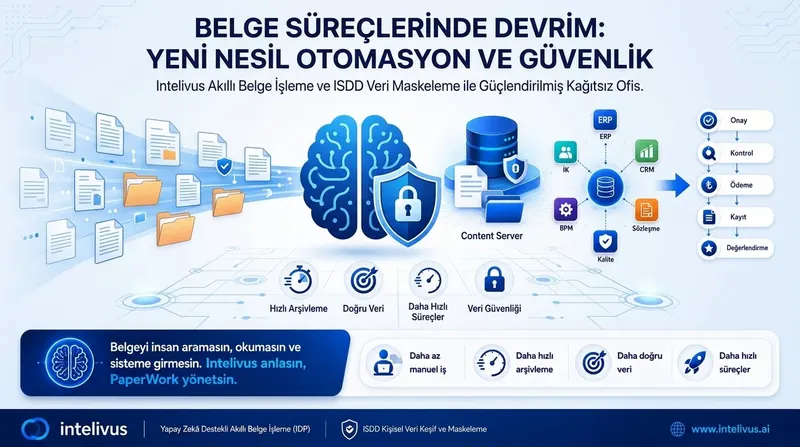
- Protecting the Existing Investment: BPM does not require replacing the existing ERP system. On the contrary, it adds a layer of agility on top of the ERP, increasing the value and lifespan of the existing investment.
In conclusion, while companies' commitment to their ERP systems is understandable, it is clear that these systems are not the best solution for every business process. The dynamic nature of processes and the need for continuous improvement make flexible, fast solutions like low-code BPM a necessity. Complementing ERP's data-centric power with BPM's process-oriented agility is the smartest way to gain a competitive advantage and achieve sustainable efficiency gains in today's business world. Seeing these two technologies not as competitors but as complements will be the key to companies' future success.
Sources
https://www.ibm.com/think/topics/enterprise-resource-planning
https://www.ibm.com/think/topics/business-process-management
https://dergipark.org.tr/tr/pub/aurum/article/1105039
Would you like to see PaperWork in your organization?
Request a Demo