A purchase request is eventually approved. The invoice is posted. The customer's application is closed. Because the work is completed, the process is considered to be working.
But how many times did that request come back? How many phone calls were made to complete missing information? At which stage did an approval that could have been assessed in a few minutes wait for days?
When the answers to these questions are unknown, part of the cost of processes stays hidden. Employees make up for disruptions through personal effort. Management sees the completed work.
To understand the value of process intelligence investments, you first need to look at this invisible effort.
Running work digitally doesn't mean it runs efficiently.
While investing in applications, automation and AI, companies may not question enough where time is lost in the current way of working. It is easy to imagine the benefit of a new screen or automation. The value of examining how a process actually works is often understood only after the losses become visible.
Why isn't "We already have reports" enough?
The monthly report may include the number of completed transactions, the average time and delayed work. This is necessary information for management. But it doesn't always explain which change needs to be made.
Let's say procurement time is getting longer. Do you need to hire more staff? Distribute approval authority? Or are records constantly coming back because requests are opened incomplete?
A decision made without understanding the cause can lead to resources being allocated in the wrong place. You might try to handle a workload caused by a gap in a form with new staff. You might automate data entry while the real wait is at the approval stage.
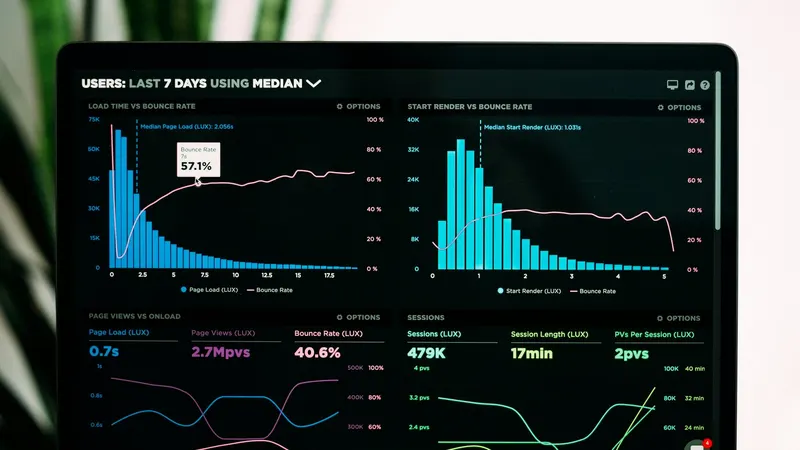
Process mining reveals from digital records which steps work actually goes through. The designed flow can be compared with the flow in practice; loops and waits can be examined. Process analytics connects this information to continuous performance tracking, risk assessment and improvement decisions.
This way, the complaint "Things are moving slowly" turns into a concrete problem that can be worked on.
The cost of software is known, the cost of waiting is not
How the budget is assessed can also play a role in postponing these investments.
Licence, consulting and integration costs are clearly visible on the offer. The cost of doing the same work again, however, is spread across different places. Employee time is spent, delivery is delayed, the customer calls again. One approval waiting can sometimes stop another team's work as well.
When these losses are not calculated, the solution can look expensive. Because there is no loss calculation to compare with the amount of the investment.
That is why, when explaining process analytics, starting with the number of metrics is not enough. Tracking more than a hundred metrics only makes sense if it is explained which decision these measurements will change.
What management wants to know is this: Where are we losing, what can we fix, and how will we know it worked?
Who owns the whole process?
When work passes through more than one department, each team may focus on completing its own task. Procurement waits for finance's approval. Finance asks the requesting unit for an explanation. The person who opened the request tries to understand why the record came back.
Everyone may be right from their own point of view. Even so, the total time grows.
When the owner of the end-to-end process is unclear, responsibility for the analytics investment also becomes unclear. IT waits for a request from operations. Operations sees it as a technical project. Even if the improvement team notices the problem, it may not have the authority to change the rules between departments.
That is why, at the start of a process analytics project, decision authority should be discussed as much as data. When a bottleneck is found, who will step in? Who will approve the change? Who will follow up on the result?
Visibility can make employees anxious
Showing at which step work is waiting is useful. But if the purpose of the measurement is not explained properly, employees may see it as an audit directed at them.
Moreover, a task taking a long time does not prove that the person handling it works slowly. The record may have arrived incomplete. Information may be awaited from another unit. The difficulty of the work or the person's total workload may be different.
The analysis should take these conditions into account. When the goal is to find the points that make employees' work harder, the teams' contribution also becomes more meaningful. The person who does that work every day can explain the reason for a repetition seen in the data.
AI can flag relationships; field knowledge is needed to understand whether they are the real cause.
Process analytics should work like a business radar
Managers cannot follow every transaction one by one. Process analytics can therefore be thought of as the business's radar.
In the processes it covers, it regularly monitors waiting times, rework, errors and deviations from targets. When work starts to pile up at a certain point or a delivery time is at risk, it shows where to intervene.
It is an advantage when analytics is a natural part of the process management platform. Measurement continues as transaction records are created. Teams need less to gather data from different files before every review. For this, the visibility and data quality of work done outside the system must also be addressed.
AI can interpret this data in process health reports and present possible causes and improvement suggestions. Instead of reviewing hundreds of indicators one by one, the manager can focus on the points that need attention.
But the problem doesn't solve itself just because the radar raises an alert.
Does the way of working change after the report?
When a report shows that work is piling up at a particular approval step, a decision needs to be made. Will the distribution of authority change? Will the control conditions be reviewed? Will requests opened with missing information be validated at the start?
If the recommendation is not linked to work with an owner and a completion date, you may face the same problem in the next report.
The contribution of process analytics to the business is that it can also track the result of the change made. Has waiting decreased? Have loops dropped? While speeding up one step, has workload been created somewhere else?
Without this follow-up, saying "We improved the process" remains an unverified assessment.
When investing in process analytics, the first question companies should ask may not be which technology to buy. It is more useful first to choose a piece of work that is often delayed, keeps coming back or constantly keeps teams busy.
When where that work waits is revealed and the reasons are examined, the case for the investment also becomes concrete. Sometimes the need is a new application. Sometimes fixing a missing field in a form or removing an unnecessary approval is enough.
Before asking employees to be faster, you need to see what makes it hard for the work to move forward.
Would you like to see PaperWork in your organization?
Request a Demo